
Prof. Dr. Thomas Kupfer
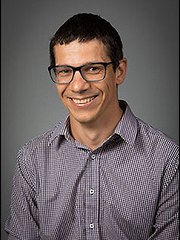
Head of group
Address
Office
Contact
I am PI of the ERC Starting grant CompactBINARIES (2023 - 2028). My research group studies the late stages of stellar evolution and the population of gravitational-wave sources in the LISA band, with a particular focus on hot subdwarf binaries, white dwarfs, and AM CVn systems. We are active members of several major international collaborations, including BlackGEM, the German eROSITA consortium, and SDSS-V. Within SDSS-V, I serve as co-lead of the Target of Opportunity (ToO) Working Group.
I am a member of the steering committee for the Time Domain Telescope, a proposed telescope array developed as part of ESO’s Expanding Horizons 2040 initiative. I am also a core member of the LISA Consortium and an active participant in the LISA Astrophysics Working Group, where I co-lead the projects “Revision of AstroWG White Paper Chapter 1 (Ultra-Compact Binaries)” and “Extending Ultra-Compact Binary Catalogs to Include Mass-Transferring Systems.” In addition, I am a former member of the LISA Multi-Messenger Working Group, leading activities related to Galactic binaries and I co-chaired the LISA Early Career Scientists (LECS) Working Group.
Before joining the University of Hamburg, I was an Assistant Professor at Texas Tech University, where I continue to hold an Adjunct Professorship. Prior to that, I held postdoctoral positions at the Kavli Institute for Theoretical Physics at the University of California, Santa Barbara, and at the California Institute of Technology. During my time at KITP and Caltech, I served as Calibration Scientist for the Zwicky Transient Facility (ZTF), overseeing survey quality assurance. I also lead a high-cadence survey of the Galactic Plane with ZTF, covering the entire inner Galactic Plane visible from the Northern Hemisphere.
My enthusiasm for astronomy began early in my studies. As a second-year undergraduate student, I joined the group of Prof. Dr. Ulrich Heber at the Dr. Karl Remeis Observatory in Bamberg. Through the ERASMUS programme, I spent three months at Armagh Observatory in Northern Ireland, working on the abundance analysis of extreme helium stars. This project later formed the basis of my Diploma thesis (equivalent to an MSc thesis). In May 2011, I began my doctoral studies at the Department of Astrophysics at Radboud University Nijmegen, where I worked on ultra-compact AM CVn binaries under the supervision of Prof. Dr. Paul Groot. I completed my PhD in July 2015.
Before deciding to study physics, I worked for three years as an industrial mechanic in the mechanical engineering industry in Germany.
Outside research, teaching, and outreach, I enjoy playing and refereeing football (soccer), volunteering with the German Red Cross, and watching American football.